1 / 0
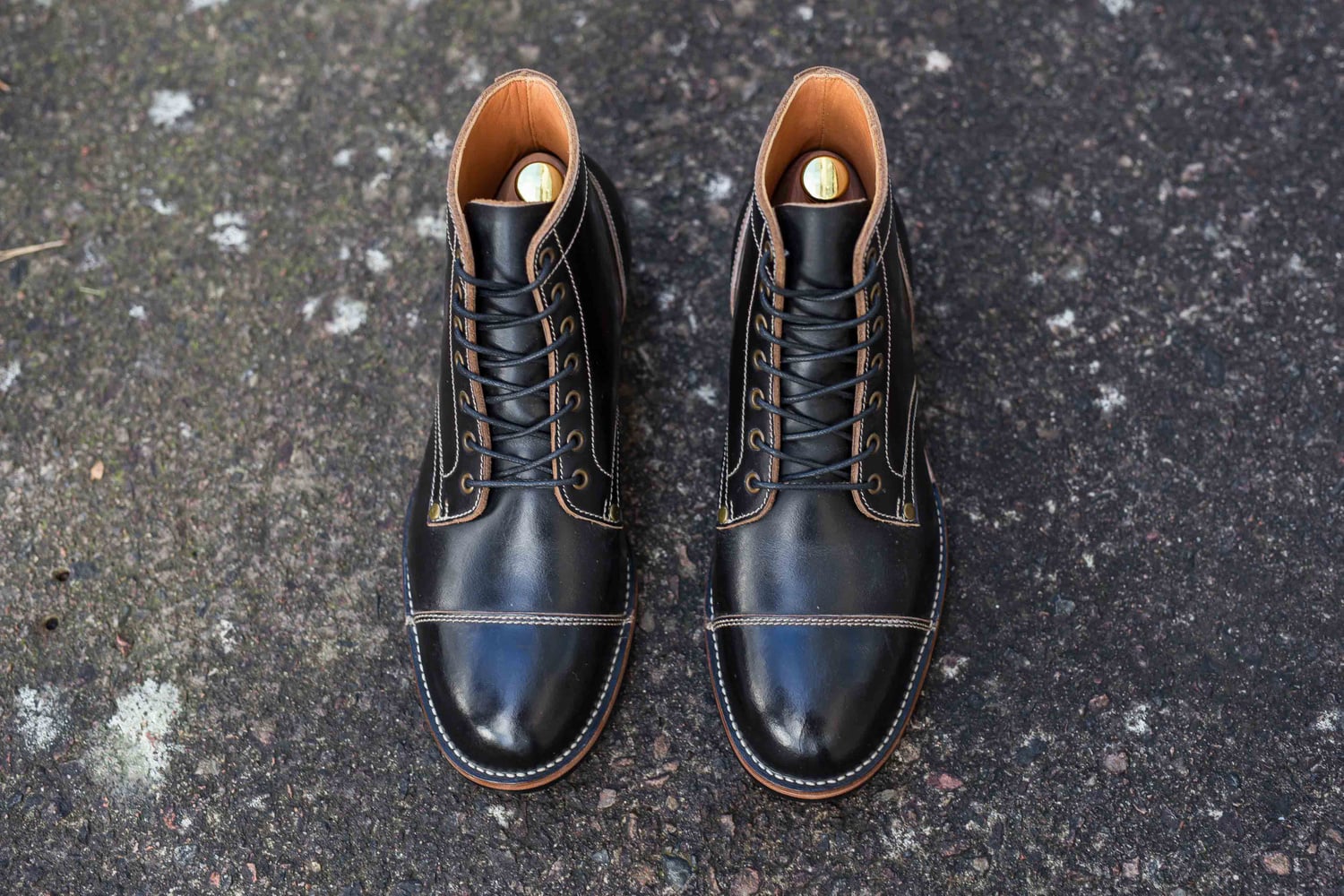
Midas x Skolyx x Dr. Sole Cap toe service boot black teacore
Note: See below for sizing guidance
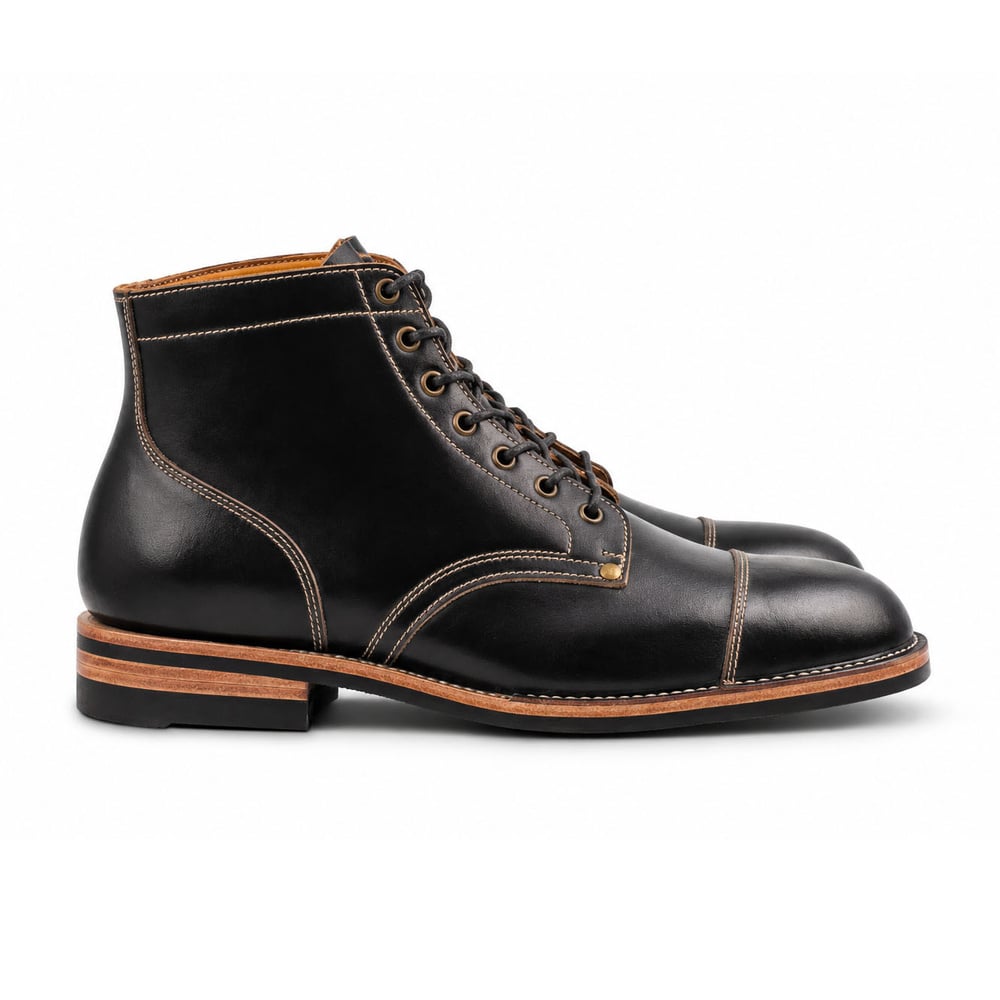
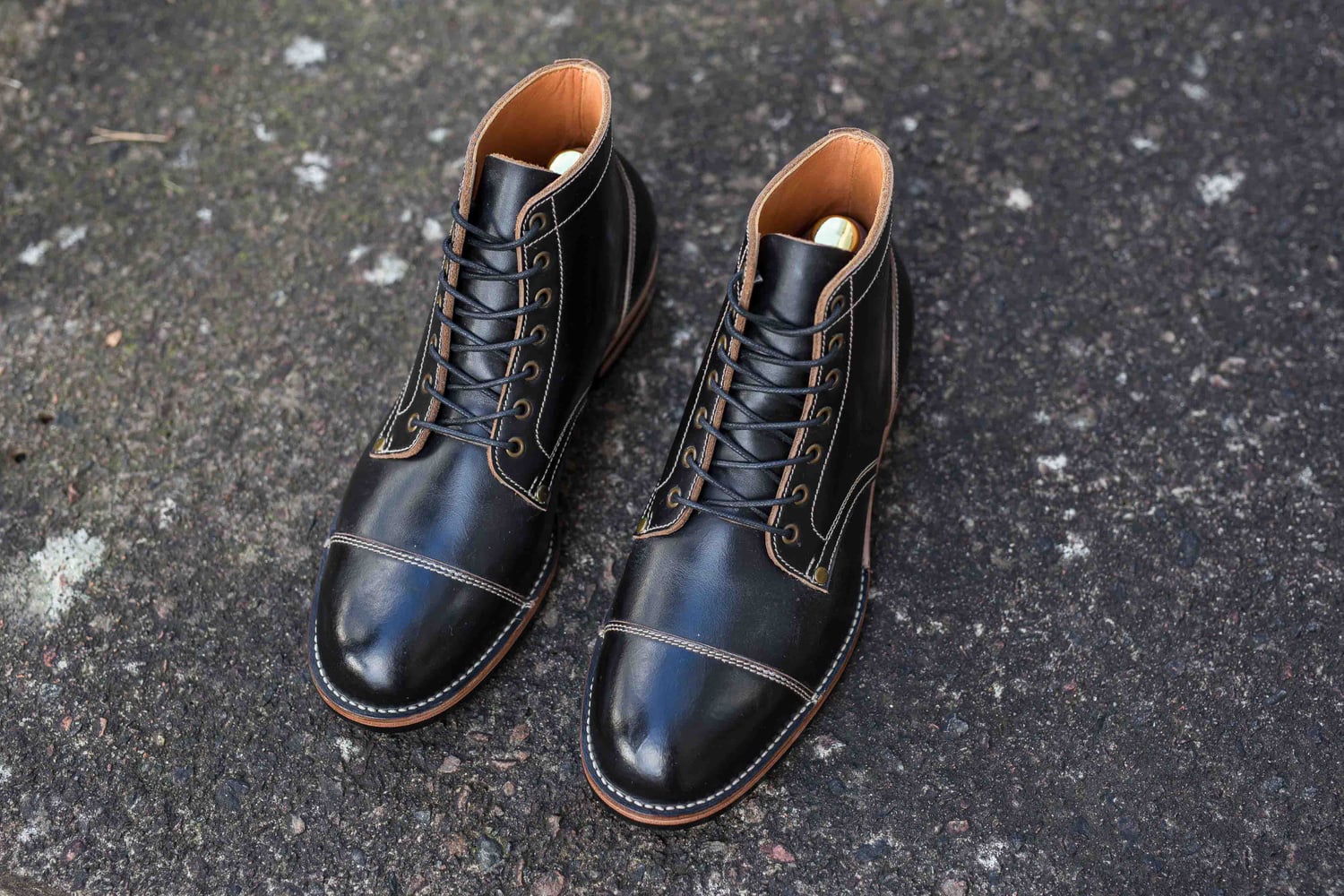
A model from our collab with Indonesian bootmaker Midas together with the acclaimed Taiwanese sole manufacturer Dr. Sole with their Supergrip soles. A cap toe service boot made in an amazing black teacore leather that can develop a beautiful patina with time.
Boots out of the ordinary, with craftsmanship and materials of absolute world class, yet available at an impressive price level considering what is on offer. This service boot model has a cap toe, rivet reinforcement and a hand-stitched Veldtschoen construction. Water-resistant boots that will stand up to anything.
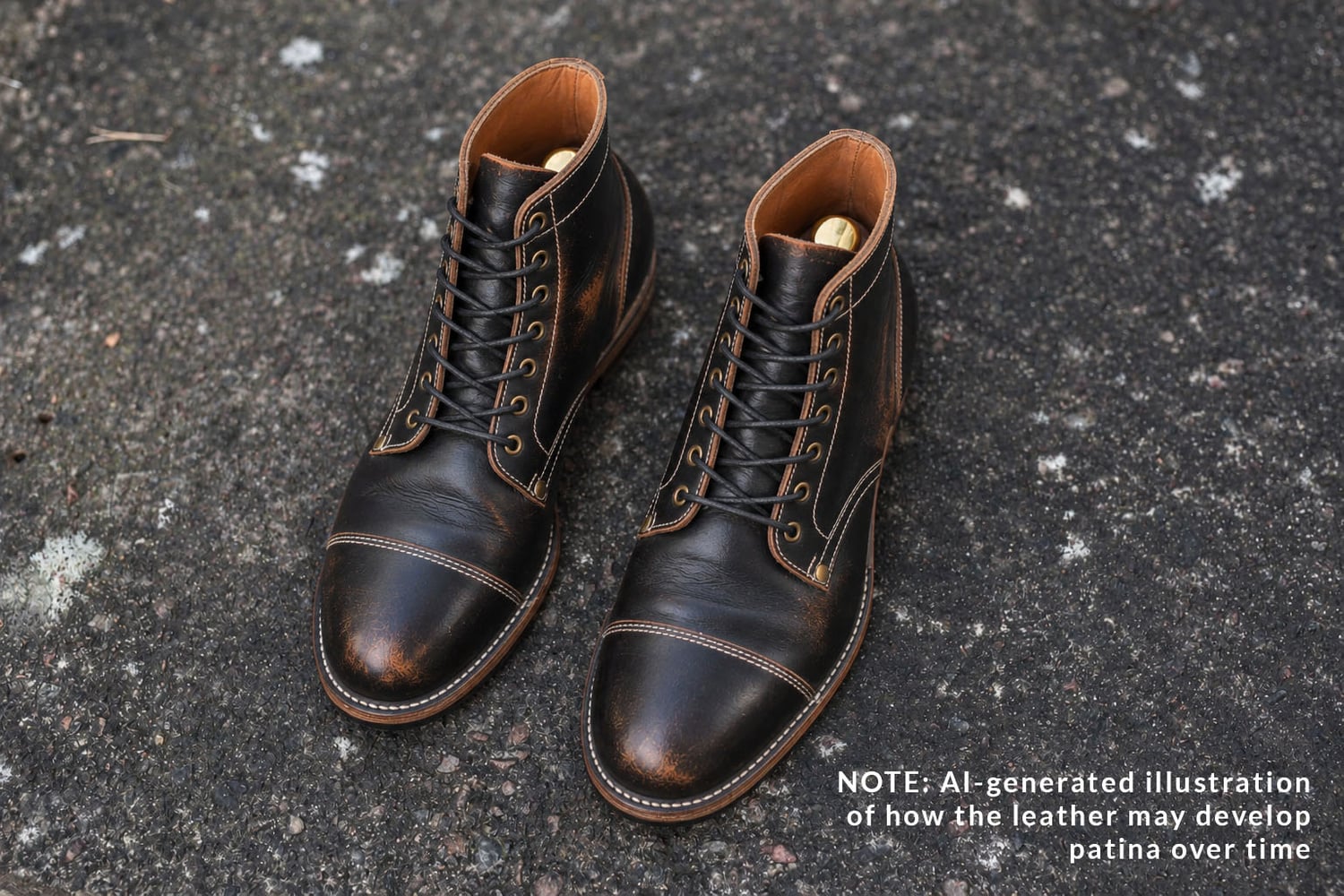
Teacore leather has a brown core beneath a black surface finish. Often associated with vintage work boots and leather jackets, it takes its name from the tea-brown tones gradually revealed as the outer finish wears. With use, these warmer shades emerge along creases and areas of friction, creating a distinctive patina that reflects how each pair is worn. Should you wish to keep the boots more uniform black, just use black shoe cream.
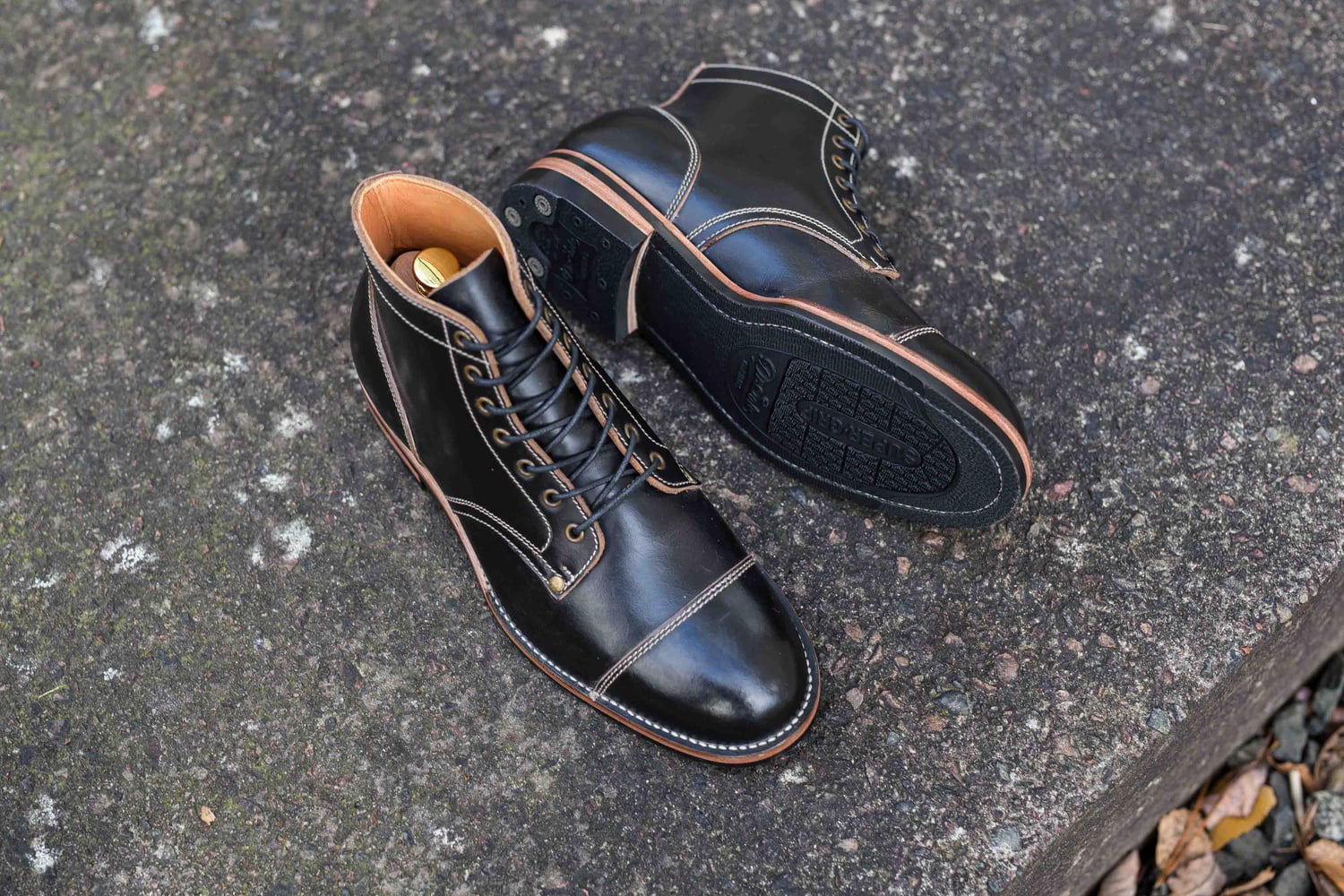
Underneath is Dr. Soles' acclaimed Supergrip sole, developed using old military boot soles as a base, in a rubber compound that provides excellent grip, good comfort and superb durability. There's a reason workwear-boots geeks around the world are singing the praises of Dr. Sole, with their historically inspired soles made in the best possible rubber compounds, in their own factory. Through our collaboration, the ambition is to make their various sole variants more readily available around the world, and for more people to experience the quality on offer.
The shoes are entirely handmade (apart from the upper being machine stitched), they are lasted by hand, have hand welted Veldtschoen construction, and with a sole seam sewn by hand, despite being made with a rubber sole (!). Veldtschoen means that the upper leather is turned outwards and lies on top of the welt (while the lining leather is still attached with the welt seam to the insole, like on normal welted shoes), this makes them even more resistant to water. Combined with a half so-called "gusset tongue", these are shoes that can really handle rain and snow.
We also have a higher specification than regular Midas shoes with real leather heel stiffeners, which mould nicely to the foot and can be reshaped if necessary, made from the same type of veg-tanned "shoulder" leather as the insoles. The boot is based on the Edlyn last, which is a classic service boot last with a round toe.
Indonesia is one of the world's foremost centres for the manufacture of workwear boots, a tradition that goes back to when the country was a Dutch colony, but which has evolved and been refined over the decades since the country became independent in the 1940s. Uniquely, however, everything is still almost exclusively done by hand, not with machines like the shoe lasting machines, Goodyear machines and McKay machines for stitching and so on, but with awl, needle, knife, hammer, etc. The production is in most cases very small scale, Midas / Winson is a small workshop of eight people who only make about 30 pairs of shoes a month.
These are boots that are made to be used hard, and that will only look better and better as the years go by. Made of thick leather, both in terms of upper leather and insole leather, that requires some time to break in but then becomes like one with your feet (a good tip for easier break-in is to not use the top eyelets).
See more detailed specifications below, and read more detailed information about the shoes and about Midas Bootmaker here.
NOTE: See below for sizing guidance.
- MaterialSmooth leather
- LastEdlyn
- SoleRubber sole
- TypeBoots
- WidthF (standard)
- GenderMen
- ColorBlack
- ConstructionHand welted
- BrandMidas Bootmakers
Listed below are the full specifications of these shoes, and how they differ from standard Goodyear welted shoes:
- Lasted by hand, using pliers and hand hammered nails. When the upper is pulled over the shoe last, this is done with two different machines on standard Goodyear welted shoes.
- Insole made of thick vegetable tanned shoulder leather where the holdfast for the welt seam is carved out by hand with a sharp knife. On regular welted shoes it's a slightly thinner leather insole with a canvas strip glued to it, to which the welt is stitched.
- The heel stiffeners are made from the same type of leather as the insole, where it's split into thinner pieces and these are then cut and skived by hand to act as stiffeners, which when attached by hand treated with starch-based paste which makes the leather stiff when dry. On regular welted shoes, the heel stiffener is usually made of celastic or leather board (leather dust mixed with glue) that is preformed, in some cases (as on TLB Mallorca Artista) of real leather but often also then preformed.
- Welt stitch sewn by hand, with awl, needle and twisted thread. When the leather strip that runs around the shoe is attached to the upper leather (lining in the case of Veldtschoen) and the insole, the seam on regular welted shoes is sewn with a Goodyear machine.
- Sole stitch sewn by hand. The seam that attaches the welt to the outsole, the one that is removed and remade when you resole the shoes (until the welt becomes too worn and needs to be replaced as well) and which is sewn with a McKay sewing machine on regular welted shoes.
- The bottom filling consists of a cork plate in the front part, instead of the cheaper cork mass usually used. At the waist is a metal shank covered with the same vegetable tanned leather as the insole is made of, otherwise often just cork mass is used here as well.
- The heel is built up layer by layer, and pegged by hand from both the bottom and the inside of the shoe. Almost all factory-made welted shoes use pre-built heels that are put on the shoes in one piece and pegged by machine.
Read even more about how the shoes are made and about Midas Bootmaker, and watch footage of the production, here.
Which shoe care products to use:
If you want to maintain a natural patina, it's recommended to use Saphir Medaille d'Or Crème Nappa conditioner (which is like Bick-4 but without silicone). If you want to keep the original look as much as possible or cover larger marks, use Saphir Medaille d'Or Creme Pommadier shoe cream in a matching colour. For more thorough yet gentle cleaning use Saphir Medaille d'Or Leather Cleanser. We do recommend using cedar wood shoe trees to prevent unnecessary creasing and extend the lifespan of your footwear.
Read more about how to use these products on the respective product pages, or in the shoe care guide linked below.
Basic shoe care:
- Don’t use the same pair for two consecutive days
- Brush / wipe the shoes off after use
- Use shoe trees and shoehorn
- Treat regular leather with shoe cream, treat suede and textile with waterproofing spray
Learn more on these steps in this guide.
Further shoe care info:
Read this thorough guide, which also includes video, on how to clean, nourish and shine leather shoes.